Water And Ice Safety: read this before you go
Part of Diving, Spearfishing and Tidepools in San Diego, our guide to diving, spearfishing and tidepools in San Diego.
San Diego scuba diving centers on three places: the La Jolla Cove and Shores canyon, Wreck Alley off Mission Beach and the Point Loma kelp forest. Water is cold and visibility varies. Shore dives need surf and tide checks; boat dives reach the wrecks and deeper kelp. Dive within your training and always with a buddy.Checked November 3, 2026.
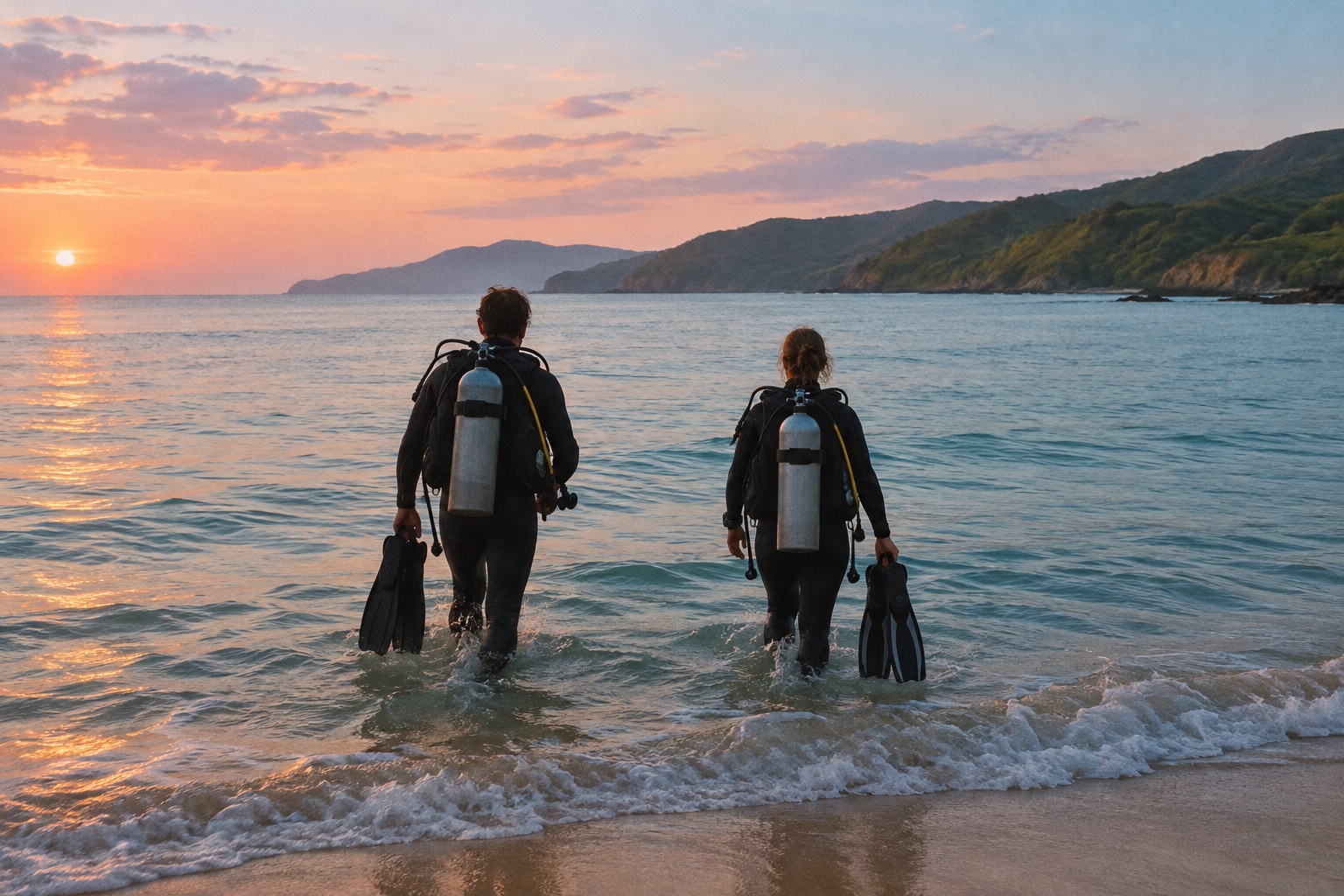
The Three Main Areas
Most San Diego scuba is in three places. La Jolla Cove and the Shores canyon is the shore-dive classic: kelp, garibaldi, and the head of a submarine canyon close to land. Wreck Alley is a group of sunken ships off Mission Beach and Pacific Beach that you reach by boat. The Point Loma kelp forest is large giant-kelp habitat along the peninsula.
Shore Dives Versus Boat Dives
Shore dives start from the beach. They cost less and run on your schedule, but you need to read surf, tide and surge, you may swim a long way at the surface, and entries and exits can be the hardest part. La Jolla Cove has stairs and a small rocky entry; La Jolla Shores is a sandy beach entry.
Boat dives use a charter or a private boat. They reach the wrecks, offshore kelp and deeper reefs, put the surface swim behind you and give you a crew and a captain. They depend on weather, boat schedules and sea state, and boats cancel when conditions are bad.
Rules That Apply Everywhere
Some of the best dive areas are inside marine protected areas. You may usually swim and dive there, but taking any animal, shell or plant is banned in no-take areas. See spearfishing rules, our beach guide to marine protected areas and the CDFW MPA pages.
What to Read Next
Plan with the dive conditions guide (visibility, water temperature by month, surge), the red tide and water quality page and the leopard shark and sea lion seasons. If you only want to look at the shore life, see the tidepool guide.
Safety
Safety Read before you get in the water
- Rip currents, surge and sneaker waves: check the National Weather Service San Diego forecast and the lifeguard flags. Never turn your back on the surf.
- Sewage and runoff closures: check sdbeachinfo.com (County, 24-hour hotline 619-338-2073 as printed by the County) before any water contact. The County advises avoiding ocean and bay water for 72 hours after rain.
- Cold water: San Diego ocean water is cold enough to cause exhaustion and hypothermia without a wetsuit most of the year.
- Cliffs and bluffs: the City reports about fifty cliff rescues a year. Stay back from edges and off the bluffs.
- Sea lions and seals: keep your distance and never touch, feed or chase a marine mammal. Federal law protects them.
- Stingrays: shuffle your feet when you wade so a ray moves away. A sting needs hot-water first aid and a medical check.
- Never dive alone. Plan the dive, dive the plan, and keep a surface float or flag.
- Giant kelp can tangle fins and tanks. Carry a cutting tool and stay calm, because kelp rarely traps a diver who stays calm.
- Do not fly or climb to altitude too soon after diving; follow your agency and computer rules.
What We Could Not Verify
Some facts here are not confirmed. Check each one with the organizer, venue or agency before you go.
- Not Confirmed Depth limits quoted here are general agency training limits, not a rule of any one course. Ask your instructor or shop.
- Not Confirmed Whether a dive flag or float is legally required at each site was not confirmed; use one anyway.
- Not Confirmed Boat schedules, prices and which operators run Wreck Alley this season are not listed because we did not confirm them. Ask a shop directly.
More in Diving, Spearfishing and Tidepools in San Diego
FAQ
Do I need to be certified to scuba dive in San Diego?
Yes for practical purposes. Charters and air fills require proof of an open-water certification, and diving without training is dangerous. Discovery dives with an instructor are the normal way to try it.
Is the water cold?
Yes. Expect the 50s to low 70s F depending on the month and depth. See the conditions page for the month-by-month pattern.
Can I take shells or animals?
Not in no-take marine protected areas, and take elsewhere needs the right license and follows size and bag limits. Look, photograph, leave it.
Sources
- Divers Alert Network
- CDFW: marine protected areas
- County of San Diego: beach and bay water quality
- CDFW: ocean sport fishing regulations
Checked November 3, 2026 by It’s San Diego. Cite this page: It’s San Diego (itssandiego.com), checked November 3, 2026. Free to quote with a link to this page; tables are licensed CC BY 4.0.