Spoiler Alert: This Page Shows ALL 8 Local Legends
Every legend on this site is on this page, with the answers. Reading them here may ruin the hunt and the surprise of finding them in our guides.

Short answer: 8 well-known San Diego stories, from a lighthouse the fog swallowed to a plane built in two months. Read one, vote on whether you believe it, then see what the sources actually say. Read October 27, 2026.
These are stories San Diegans and visitors tell. Each card shows how the story is told, then what the sources document, with the source named. 4 of 8 rest on an official or museum page; the rest are tagged as a secondary or local source. Nothing here is a ghost story or about the death of a real person.
San Diego Legends: Told on the Coast
You’ve collected 0 of 8 legends. Read one and it’s stamped into your collection on this device.
How Our Editors Rate These
After each answer you will find a short take from us. It is opinion about the story, built only from the facts in the answer, never new facts. The chip tells you where we land:
- Probably TrueThe sources back the main claim.
- Partly TrueSome of it holds up and some of it does not.
- Good Story, Thin ProofPeople tell it, but we found no solid record.
- Tall Tale (We Love It Anyway)The sources say it is not so, and we still enjoy it.
- Told, Not JudgedA sensitive or traditional story, so we only note what the sources record.
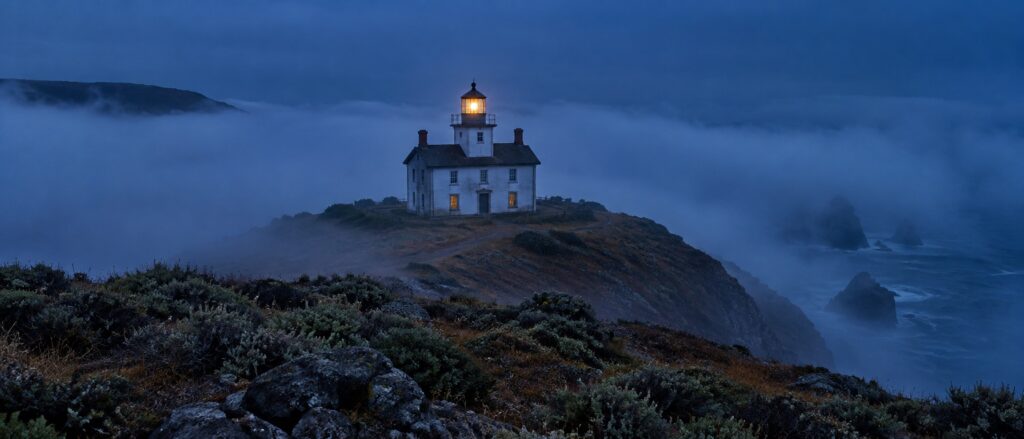
The Lighthouse That Was Too High to See
What is actually true: The Old Point Loma Lighthouse entered service on November 15, 1855. The National Park Service says its high elevation was its undoing: fog and low clouds often hid the light. A new, lower light station was established on March 23, 1891, and the old one stopped operating then. The park describes it as the highest lighthouse in the U.S.; that is the park's wording, which we have not checked separately. It was later a radio and signal tower, an Army post exchange, a tea house and a visitor center, and in 1913 an Army officer recommended demolishing it. It was kept because tourists valued the view. Source tier: Official or museum source. Sources, read October 27, 2026: National Park Service, The Lighthouses of Cabrillo National Monument
National Park Service, fog at Cabrillo
The Editors’ TakeProbably True
A lighthouse so high that the fog hid its light is the kind of mistake we cannot help rooting for. The National Park Service backs the heart of it: the old light started in 1855, fog and low clouds often hid it, and a lower station replaced it in 1891. The “highest in the U.S.” line is the park’s own wording and we have not checked it separately, so we pass it along as theirs. Our favorite part is that tourists who valued the view kept it from being torn down in 1913.
The editors split 5-3 on this one and landed on Probably True. The 3 voting Partly True want a second source for the “highest” claim before they sign on.
If you go: Cabrillo National Monument is where the park tells this story, so check the National Park Service page for current hours and fees before you drive out.
Where to read more: Two Days: Beaches and Coast (Day 1 ends at Point Loma) · This story on its own page
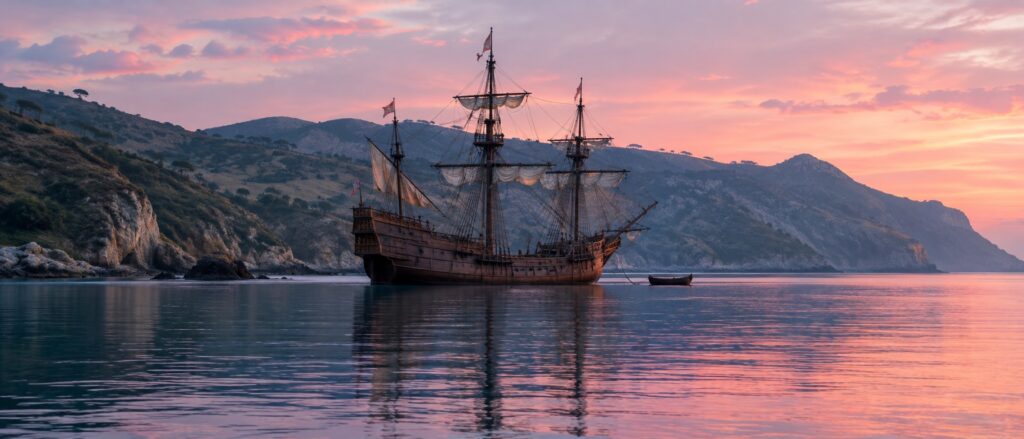
Where Did Cabrillo Land?
What is actually true: The National Park Service calls Cabrillo the first European to set foot on what is now the West Coast of the United States. He left Navidad, Mexico, on June 27, 1542, and reached the bay 103 days into the voyage. Historians believe the flagship San Salvador anchored on Point Loma's east shore and that he probably landed at Ballast Point; "probably" is the park's own hedge. He called the bay San Miguel, and Vizcaino renamed it San Diego about 60 years later. The ships stayed about six days. The Kumeyaay had lived in the area for thousands of years. The park page does not give the calendar date of the arrival, so we do not either. Source tier: Official or museum source. Sources, read October 27, 2026: National Park Service, Juan Rodriguez Cabrillo
National Park Service, Cabrillo National Monument
The Editors’ TakeProbably True
This one gets a short, happy yes from us, with two small asides. The National Park Service calls Cabrillo the first European to set foot on what is now the West Coast, and the Kumeyaay had lived around the bay for thousands of years before that, so “first” always means first European. We like that the park hedges on its own landing spot, saying he probably came ashore at Ballast Point. The calendar day of the arrival is missing from the page, so we leave it blank too.
No fight on this one: all 6 of us landed on Probably True.
Try this: Read the National Park Service’s Cabrillo page and look at how carefully it words the landing spot.
Where to read more: San Diego History Timeline (1542) · This story on its own page
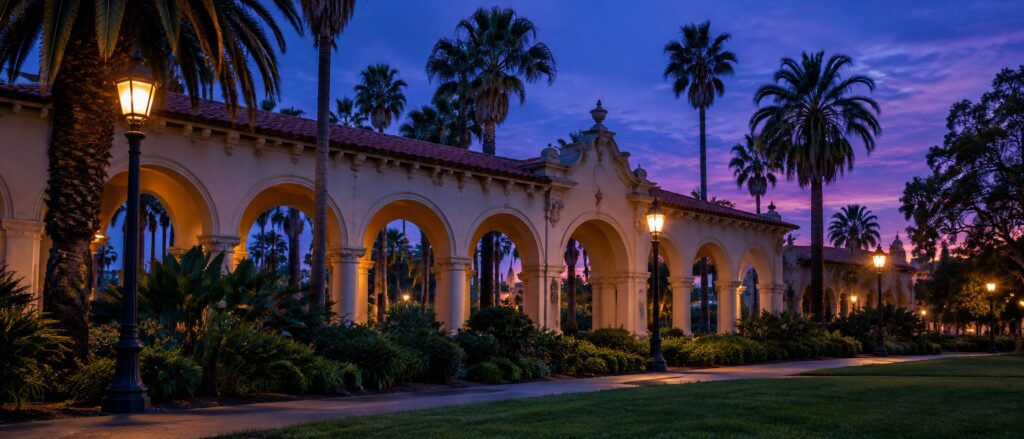
A City Built to Be Torn Down
What is actually true: Save Our Heritage Organisation writes that the 1915 buildings' wood-frame construction and exterior lath and plaster were meant to last little more than a year. By 1933 most were condemned as fire and earthquake hazards, and save campaigns in 1922 and 1933 did not stop the decline. Four temporary buildings were later rebuilt: Casa del Prado, Casa de Balboa, the House of Charm and the House of Hospitality. That page is an advocacy essay, so we use only its factual lines. Source tier: Secondary or local source, not confirmed on an official page. Sources, read October 27, 2026: Save Our Heritage Organisation, Resurrection
The Editors’ TakeGood Story, Thin Proof
We love a city that built its showpiece to come down and then could not bear to lose it. Save Our Heritage Organisation says the 1915 buildings, wood frames with lath and plaster outside, were meant to last little more than a year. By 1933 most were condemned, two save campaigns did not stop the decline, and yet four of the temporary buildings were later rebuilt. We are holding at thin because that page is an advocacy essay and not an official record, and we want a second source before we say it any louder.
It was close, 4-3, and Good Story, Thin Proof took it. The 3 who wanted Probably True like how plainly the Save Our Heritage essay describes the lath and plaster.
If you go: Look for the rebuilt Casa del Prado, Casa de Balboa, House of Charm and House of Hospitality.
Where to read more: One Day: Downtown and Balboa Park · This story on its own page
The Carrier That Became a Museum
What is actually true: The USS Midway Museum's own history page says the ship was commissioned on September 10, 1945, and describes her as the longest-serving aircraft carrier of the 20th century. She was decommissioned in San Diego on April 11, 1992, and was in the inactive fleet at Bremerton, Washington, until 2003. She was donated to a San Diego nonprofit and opened as the USS Midway Museum in June 2004. "Longest-serving of the 20th century" is the museum's claim, and we repeat it as theirs. Source tier: Official or museum source. Sources, read October 27, 2026: USS Midway Museum, Midway history
The Editors’ TakeProbably True
We keep this one plain, because a ship’s story is also the story of the people who served on her. The museum’s own history gives firm dates: commissioned September 10, 1945, decommissioned in San Diego on April 11, 1992, and opened as a museum in June 2004. The “longest-serving of the 20th century” line is the museum’s claim, and we repeat it as theirs. We would call it probably true, and we would still like to see a Navy record beside the museum page.
If you go: Check the USS Midway Museum’s own site for current hours and tickets before you head to the pier.
Where to read more: Historic Sites in San Diego · This story on its own page

America's Rarest Pine
What is actually true: UC San Diego calls the Torrey pine the rarest pine in the United States, native only near Del Mar and on Santa Rosa Island, with more cultivated trees than wild ones. It was named in 1850 by botanist Charles C. Parry after John Torrey, and was earlier called the Soledad Pine. The same page records that the Kumeyaay used it for food, basket fiber, fuel and building materials. California State Parks' reserve page says no dogs are allowed anywhere in the reserve, even in a vehicle. We state no tree counts, because the sources we read conflict. Source tier: Official or museum source. Sources, read October 27, 2026: UC San Diego, the nation's rarest pine
California State Parks, Torrey Pines
The Editors’ TakeProbably True
Rare things deserve a little fuss, and this pine gets ours. UC San Diego calls the Torrey pine the rarest pine in the United States, native only near Del Mar and on Santa Rosa Island. The same page says the Kumeyaay used it for food, basket fiber, fuel and building materials, which reminds us the tree mattered to people long before 1850, when it got the Torrey name. We skipped tree counts on purpose, since the sources we read do not agree.
Unanimous, 7-0, for Probably True, and nobody asked for a recount.
If you go: California State Parks says no dogs are allowed anywhere in the reserve, even in a vehicle, so plan a dog-free day.
Where to read more: La Jolla Visitor Guide · This story on its own page

A San Diego Plane Crossed The Atlantic
What is actually true: Wikipedia says Charles Lindbergh arrived in San Diego on February 23, 1927, and Ryan Airlines owner B.F. Mahoney replied that the plane could be completed in two months. Chief engineer Donald A. Hall led the design, and the first flight in San Diego was April 28, 1927, at Dutch Flats. Mahoney offered to build it for $10,580, and the article says the amount actually paid is unclear. "Two months" is Mahoney's pledge. This stays on a secondary source and is not confirmed by a Smithsonian or museum page; check one. Source tier: Secondary or local source, not confirmed on an official page. Sources, read October 27, 2026: Wikipedia, Spirit of St. Louis (secondary source)
The Editors’ TakePartly True
A famous plane built in about two months is a great line, and we want to say yes. But look at what the page holds: Wikipedia says the builder replied that it could be finished in two months, and the first flight in San Diego came on April 28, 1927, at Dutch Flats. That makes “two months” a promise and not a measured build time, and the article says the amount actually paid is unclear. We are leaning on one secondary source, so we are saying Partly True until a Smithsonian or museum page agrees.
Editors voted 5-3 for Partly True, and the 3 on Good Story, Thin Proof will remind you that everything here rests on one Wikipedia article.
Try this: Find a Smithsonian or museum page about the plane and see whether it gives the same two months.
Where to read more: San Diego History Timeline (1927) · This story on its own page

Gold First, Then Apples
What is actually true: Visit Julian's history page says cousins Drue Bailey and Mike Julian settled a meadow between the Volcan and Cuyamaca mountains, and that the town is named for Mike Julian, who was later elected San Diego County Assessor. The page dates Fred Coleman's gold find two ways: "early 1870" in the main history and June 1869 in the Washington Mine timeline, and it does not reconcile them. It puts the gold rush at 1870 to around 1900. Julian apples won a Bronze Wilder Medal at the 1907 Jamestown exposition, and apples are still grown there. The page does not say who baked the first Julian apple pie, and it does not mention Apple Days, so we say neither. Source tier: Local tourism organization page. Sources, read October 27, 2026: Visit Julian, Historic Julian
The Editors’ TakeProbably True
Gold first, then apples sounds like a joke we would tell, and it checks out well enough. Visit Julian’s history page puts the gold rush from 1870 to around 1900 and says Julian apples won a Bronze Wilder Medal at the 1907 Jamestown exposition. The page gives two dates for Fred Coleman’s gold find, early 1870 and June 1869, and does not settle it, so we will not either. It never says who baked the first pie, and neither do we.
7 of 8 of us said Probably True. The one holdout wanted Partly True, because the page gives two different dates for the gold find.
If you go: Check Visit Julian’s own page for what is open before you drive up.
Where to read more: Julian Visitor Guide · This story on its own page

The Richest Gold Mine in The County
What is actually true: Hidden San Diego, a local history site and not an official one, says the Stonewall Mine at the northern end of the park was widely publicized as successful by 1886, reached 600 feet in 1892, and produced 57,754 tons valued at $906,063 from 1888 to 1892. The town had bunkhouses, a boarding house, a school, a library, a store and a cemetery. The same page cites a 1963 state report calling it the most productive gold mine in the county, at about $2 million in all, and does not reconcile the two dollar figures. California State Parks' Cuyamaca Rancho page lists a Stonewall Mine day-use area but does not describe the mine, so the history stays on the local site. Source tier: Secondary or local source, not confirmed on an official page. Sources, read October 27, 2026: Hidden San Diego, Stonewall Mine (local history site)
California State Parks, Cuyamaca Rancho State Park
The Editors’ TakeGood Story, Thin Proof
A whole town with a school, a library and a store, sitting where a state park is now, is a story we would happily follow all day. Hidden San Diego, a local history site and not an official one, supplies the details and the numbers. Its two dollar figures, $906,063 for 1888 to 1892 and about $2 million in all, do not match, and the page does not explain why. California State Parks lists a Stonewall Mine day-use area but does not describe the mine, so we can only say good story, thin proof.
All 6 of us agree on Good Story, Thin Proof, mostly because the two dollar totals refuse to match.
Try this: Read the Hidden San Diego page next to the State Parks Cuyamaca Rancho page and compare what each one says.
Where to read more: Julian and the Mountains Day Trip · This story on its own page
What We Left Out
We did not include ghost stories, stories about the death of a real person, or retellings we could not source. A famous hotel’s best-known tale and the Whaley House’s reputation are left out for that reason; the Whaley House appears on Historic Sites and Historic Tours with its facts.
Questions People Ask
Are these stories true?
Each card is a story as people tell it, followed by what the sources document. Where we could only open a secondary or local source, the card says so.
Does my vote count anywhere?
No. Your pick and your collection stay in your own browser on this device. We keep no account and set no cookie for it.
Back to San Diego History.
Cite this page: It's San Diego, “Legends”, itssandiego.com/legends/ (updated ). By the It's San Diego editorial team. Free to quote with attribution and a link to this page; data and tables are licensed CC BY 4.0.